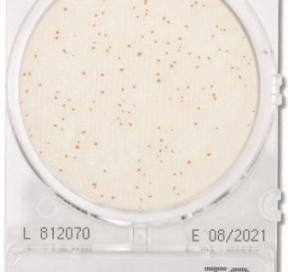
CompactDry ETB Enterobacteriaceae – Shimadzu
Model: ETB
Mã hàng: 54055
Manufacturer: Shimadzu – Japan
Operating procedure:
- Aseptically weigh 10.0g of sample or use a pipette to take 10.0ml (for liquid samples) into a suitable sterile container (e.g., sterile sampling bag, dilution bottle, Whirl-Pak bag).
- Add 90.0ml of diluent to achieve a 1:10 dilution and homogenize the sample.
- Adjust pH if necessary.
- Recommended diluents are typically Butterfield's phosphate buffer, Maximum Recovery Diluent (MRD), and other appropriate diluents depending on BAM guidelines.
- If necessary, further sample dilutions can be performed.
- Open the Compact Dry plate cap. Use a micropipette to dispense 1.0ml of the diluted sample into the center of the Compact Dry plate. Close the cap.
- Invert and incubate the Compact Dry plate under specified conditions (According to AOAC International: 35 ± 2°C for 24 ± 2 hours; according to MicroVal: 37 ± 1°C for 24 hours; and according to NordVal: 37 ± 1°C for 24 ± 2 hours).
Reading results and counting colonies:
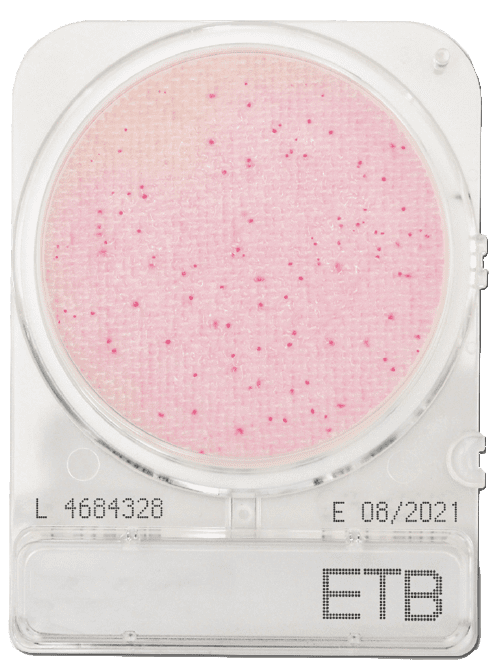
- Select plates with 10–150 colonies.
- Colony morphology: red/red-purple colonies.
Note:
- Although some non-Enterobacteriaceae bacteria may grow and form white and/or yellow colonies on this plate, only red/red-purple colonies should be counted.
- Some Enterobacteriaceae can grow rapidly and alkalize the medium. As a result, red/red-purple colonies may lose color and turn into yellow colonies. If necessary, plates can be counted at 18 hours.
- Colonies of certain Enterobacteriaceae may be diffuse. In this case, count the dark spot at the center of each diffused colony.

 By clicking this button, you authorize METTLER TOLEDO to contact you so that we can fulfill your request and discuss our products and services with you.